

Disrupted Supply Chains Threaten Food Security for Millions in the Middle East Due to Ongoing War

- Europe and Arabs
- Thursday , 12 March 2026 4:15 AM GMT
Gaza-Beirut: Europe and the Arabs
Amid escalating humanitarian crises in the Middle East and the repercussions of the ongoing war in the region, the World Food Programme (WFP) has warned of increasing pressure on food security in several countries already suffering from economic fragility and protracted conflicts.
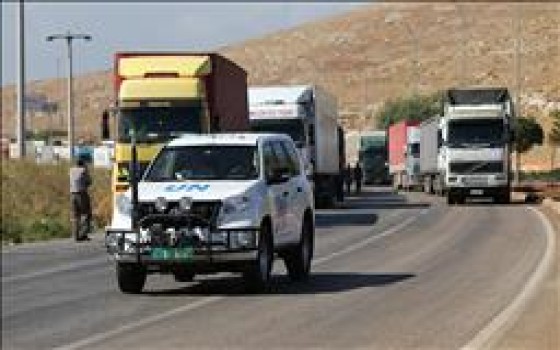
In an interview with UN News, Samer Abdel Jaber, WFP Regional Director for the Middle East, North Africa, and Eastern Europe, discussed the program's estimates indicating that millions of people in the region rely on food aid to survive, at a time when global supply chains are facing increasing disruptions due to geopolitical tensions and the impact on vital shipping lanes such as the Strait of Hormuz and the Red Sea.
In this context, Abdel Jaber stated that the WFP has activated emergency preparedness measures in several countries in the Middle East and North Africa to ensure the continued delivery of aid to the most vulnerable populations. Regarding the key points raised in the interview, the UN Daily News reported: "Some of the points discussed:
The program is trying to maintain its humanitarian operations in approximately 10 countries in the region, in addition to Afghanistan. Initial estimates indicate a need for around $200 million to fund the humanitarian response over the next three months.
In the same context, the UN Daily News also addressed the World Food Programme's activities in Lebanon, stating: "In Lebanon, more than 700,000 people have been internally displaced, while 84,000 Syrian refugees have returned to Syria, and approximately 9,000 Lebanese have crossed into Syria. The program currently supports 215 shelters, where 52,000 people receive daily food assistance and 180,000 receive cash assistance.
In the Gaza Strip, the World Food Programme is striving to deliver food assistance to approximately 1.6 million people monthly. However, the closure of crossings has led to a 270% increase in the price of flour, threatening to reduce food rations to only 25% of an individual's needs." Amid a severe funding crisis, the program was forced to suspend aid to 135,000 Syrian refugees in Jordan and 250,000 Sudanese refugees in Egypt.
Lebanon is facing a “perfect storm” of unpredictable challenges, compounded by conflict, mass displacement, and dwindling humanitarian resources, warned Imran Riza, the UN Resident Coordinator and Humanitarian Coordinator in Lebanon, in an interview with UN News.
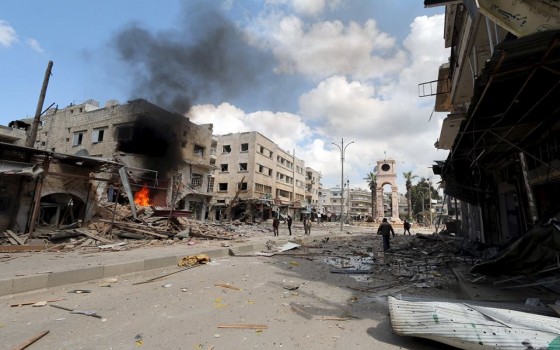
The current escalation in Lebanon began on March 2, when Hezbollah fire prompted a strong Israeli retaliatory strike. Since then, clashes have intensified, with Hezbollah increasing its fire and Israel escalating its attacks and ground incursions, resulting in what Riza described as a “full-blown humanitarian catastrophe.”
According to the UN official, the Lebanese Ministry of Social Affairs registered nearly 700,000 displaced people in just one week. This rapid displacement reflects the scale of the crisis and its growing impact on civilians. In an interview with UN News, Imran Riza said the civilian toll was staggering, noting that 83 children were killed in the first week of the conflict. He added that children accounted for approximately 20% of all casualties, while women made up about 21%.
These figures underscore what Riza described as a recurring pattern in modern conflicts, where civilians—especially children—are disproportionately affected.
Displacement is disrupting education across the country, with some 120,000 displaced people living in collective shelters, most of which have been set up in government schools. Classrooms have been converted into temporary shelters, depriving many children of their education.







No Comments Found