

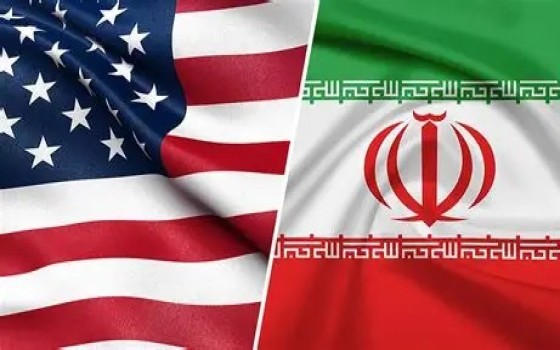
The European Union calls for adherence to the ceasefire and freedom of navigation in the Strait of Hormuz... US-Iran negotiations... Warning of an Israeli role in undermining diplomatic efforts

- Europe and Arabs
- Friday , 10 April 2026 4:37 AM GMT
Brussels: Europe and the Arabs
Negotiations between the United States and Iran are scheduled to begin this weekend, starting Saturday, but they will commence under unfavorable circumstances. Israel has continued its bombardment of Lebanon, only a few ships have been able to pass through the Strait of Hormuz so far, and Trump continues his anti-NATO rhetoric.
The European Union welcomed the ceasefire agreement reached between the United States and Iran. It praised Pakistan and other regional partners for their mediation efforts, which contributed to this positive outcome. EU foreign policy chief Maja Makalais said in a statement distributed in Brussels,
The European Union welcomed the ceasefire agreement reached between the United States and Iran. It commended Pakistan and other regional partners for their mediation efforts, which contributed to this positive outcome.
We urge all parties to fully respect the ceasefire throughout the region, cease all military operations, and guarantee freedom of navigation and safe passage through the Strait of Hormuz, in accordance with international law, as enshrined in the United Nations Convention on the Law of the Sea. We also call for an immediate cessation of hostilities in Lebanon, which are claiming many civilian lives. All parties must abide by international humanitarian law and protect civilians, civilian infrastructure, UN peacekeepers, and humanitarian personnel.
Diplomacy is key to resolving all outstanding issues. The parties should continue to engage in good faith in efforts to reach a sustainable agreement on all areas of common interest.
Now is the time to develop a comprehensive strategy for achieving lasting peace throughout the Middle East.
The European Union will contribute to all diplomatic efforts in this endeavor, taking into account all its interests and concerns, in coordination with its partners. For his part, US President Donald Trump expressed optimism about the possibility of reaching a peace agreement with Iran, at a complex political juncture where diplomatic efforts are intertwined with the ongoing Israeli escalation in Lebanon, amidst accelerating international moves to contain the conflict.
In an interview with NBC, Trump said he was "very optimistic" about reaching an agreement soon, as a diplomatic delegation led by Vice President J.D. Vance prepares to travel to Pakistan for high-level talks aimed at ending the conflict.
He added that Iranian leaders "talk very differently in meetings than they do to the media. They are much more reasonable," noting that "they agree to everything they have to agree to."
He continued, "Remember, they've been subdued. They don't have an army anymore." At the same time, he warned that failing to reach an agreement "will be very painful." Trump had announced a two-week temporary halt to the bombing campaign after threatening that "an entire civilization would perish" if Iran did not reopen the Strait of Hormuz, a vital waterway heavily impacted by the conflict. Disagreements persist regarding the terms of the agreement, with Trump and Israeli Prime Minister Benjamin Netanyahu insisting that Lebanon is excluded, while Iran maintains otherwise.
Lebanon Between a Fragile Truce and Continued Bombardment
This cautious optimism comes amidst a seemingly fragile truce, as Israeli airstrikes on Lebanon continue, reflecting a contradiction between the political process and the reality on the ground. A senior US administration official revealed to NBC that Trump, in a phone call on Wednesday, asked Netanyahu to reduce the strikes to facilitate the upcoming negotiations.
Trump confirmed this approach, noting that the Israelis were "calming down" in Lebanon, saying, "I spoke with Bibi (Netanyahu), and he's going to tone things down. I think we all need to be a little more relaxed." Vance had used similar rhetoric while speaking to journalists in Hungary, suggesting that the Israelis might "exercise some restraint" in their attack on Lebanon.
However, Netanyahu has shown no public indication of being willing to de-escalate the strikes, merely stating that his government would seek "direct negotiations" with Lebanon, leaving the door open to further ambiguity regarding Tel Aviv's intentions.
Tehran sets its conditions
For his part, Iranian Foreign Minister Abbas Araqchi escalated his rhetoric, stating in a post on the X platform that the resumption of Netanyahu's criminal trial next Sunday could be accelerated by the implementation of a comprehensive ceasefire in the region, including Lebanon, potentially leading to his imprisonment.
He added that allowing Netanyahu to undermine diplomatic efforts could push the US economy toward collapse, considering this "America's own choice," describing this course of action as "folly," while simultaneously asserting that Tehran is "fully prepared to confront it."
Meanwhile, European leaders called for the inclusion of Lebanon in the limited ceasefire.
Turkish President Recep Tayyip Erdoğan told his Iranian counterpart, Masoud Pezeshkian, in a phone call on Thursday that the upcoming negotiations in Pakistan should be used to achieve "lasting peace and stability," according to the Turkish presidency.
Islamabad Negotiations
The nature of the upcoming talks in the Pakistani capital, Islamabad, remains unclear, despite confirmation of Vance's participation alongside White House Special Envoy Steve Witkoff and Jared Kushner. The composition of the Iranian delegation is also still unknown.
Over the past two weeks, Vance has been in contact with Pakistani intermediaries regarding a potential agreement, leading to intense diplomatic activity, particularly during his visit to Hungary on Monday and Tuesday, according to a source familiar with the talks.
In preparation for the talks, Pakistani authorities have reinforced security measures in Islamabad by deploying hundreds of police and paramilitary personnel, according to the Associated Press. The silence of the Artemis 2 crew embarrasses Trump during a call from space.
As for the proposals, a ten-point peace plan presented by Iranian state media stipulates that Tehran retain control of passage through the Strait of Hormuz in exchange for a complete withdrawal of US combat forces from their bases in the region. Trump indicated that he does not consider this a valid basis for an agreement.
A former commander in the Iranian Revolutionary Guard acknowledged that many of the regime's conditions may not be acceptable to Washington, but he emphasized Tehran's willingness to make concessions, indicating that a negotiating margin still exists despite the escalation.


No Comments Found