

Launch of the First “Borrowers Platform” – A Historic Milestone in Global Finance… More Than 60 Developing Countries Now Spend at Least 10% of Their Government Revenue on Interest Payments

- Europe and Arabs
- Thursday , 16 April 2026 5:15 AM GMT
Washington, New York: Europe and the Arabs
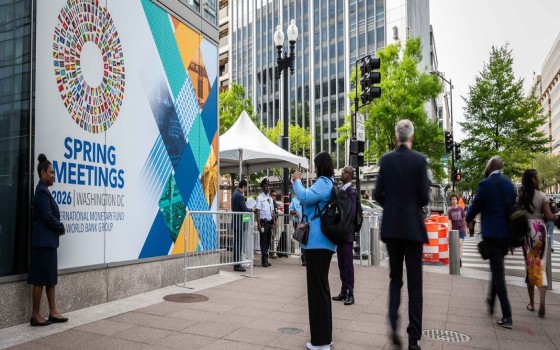
During the meetings of the International Monetary Fund and the World Bank in Washington, D.C., developing countries launched the "Borrowers' Platform," the first dedicated space for debtor nations to share knowledge, enhance coordination, and forge a collective voice on debt. According to the UN Daily News, a copy of which I received Thursday morning, the United Nations Conference on Trade and Development (UNCTAD), which serves as the secretariat for the new platform, stated that the initiative brings together finance ministers and central bank governors from developing countries to strengthen their debt management capabilities, amplify their collective voice in international discussions on the matter, and improve coordination among them.
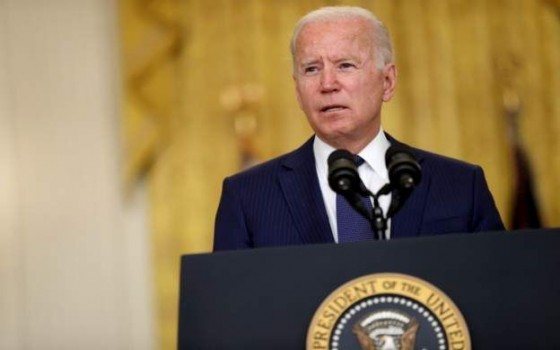
At the launch event for the "Borrowers' Platform," UN Secretary-General António Guterres described the initiative as historic, a milestone in global finance, and a step towards addressing inequalities in the international financial system.
He said the international economic and financial system is "unfair," noting that developing countries face significant challenges in managing their debt, including higher borrowing costs compared to advanced economies. He explained that developing countries have, over the past decades, paid interest rates on average more than double those paid by developed countries, with this gap reaching three times that in some African economies.
He noted that the new platform aims to provide a space for borrowing countries to exchange experiences and learn from each other's practices, as well as to enhance their ability to negotiate with creditors on a more balanced basis. It also seeks to improve debt management and enhance transparency, which could contribute to reducing borrowing costs and expanding fiscal space for development investment.
The Secretary-General said that lenders have long had dedicated coordination mechanisms such as the Paris Club, the London Club, and other consultative bodies. However, borrowers have not had anything comparable.
The Secretary-General thanked Egypt, which chaired the working group, Pakistan, the group's vice-chair, and the working group representatives from Colombia, Honduras, the Maldives, Nepal, and Zambia.
The Secretary-General pointed out that 3.4 billion people live in countries that spend more on debt servicing than on health or education. He warned of increasing pressure on these countries, including the war in the Middle East, which is significantly impacting the global economy.
He also noted the support provided by several developed countries and the agreement reached by UN member states in July at the historic International Conference on Financing for Development in Spain on the "Seville Commitment" to increase financing for developing countries.
Last October, a new UN-backed forum was launched in Geneva to help developing countries overcome the burden of unsustainable debt, which has forced more than three billion people worldwide to spend vast sums on debt repayment at the expense of health or education.
The Seville Debt Forum was established to promote fairer lending, rapid restructuring, and long-term reform of the post-war financial system.
The aim of this forum, hosted by Spain and supported by the UN, was to maintain global focus on the debt crisis and translate the firm commitments made at the Fourth International Conference on Financing for Development, held in Seville last June, into concrete action. Governments, finance ministers, and creditors from both developed and developing countries convened for what UN Secretary-General António Guterres called a “global debt dialogue,” aimed at achieving fiscal justice and ensuring that borrowing works for, not against, developing economies.
“Developing countries spend $1.4 trillion a year on debt servicing,” Guterres said at the forum’s launch event. “Some 3.4 billion people live in countries that spend more on debt servicing than on health or education. Countries should never have to choose between servicing their debt and serving their people.”
Fairer and More Sustainable Global Finance
The new forum also supports the Seville Commitment, an ambitious roadmap agreed upon at the Fourth International Conference on Financing for Development to make global finance fairer and more sustainable.
This document outlines plans to reduce borrowing costs, enable timely and equitable debt restructuring, and enhance transparency and accountability. Under this framework, a forum for borrowers was established in Seville in July to help heavily indebted countries coordinate their efforts, share legal and technical expertise, and amplify their voices in a system long dominated by major lenders.
Financial justice that people deserve
The Seville Process reflects growing concern that rising debt is hindering progress toward achieving the Sustainable Development Goals.
More than 60 developing countries now spend at least 10% of their government revenue on interest payments, while many struggle to access affordable loans.
Under the new Debt Forum framework, countries will work to establish common principles for responsible borrowing and lending, strengthen crisis prevention mechanisms, and explore reforms to the global debt structure.
The UN Secretary-General said, "The Seville Debt Forum will help achieve the financial justice that people and countries need and deserve."







No Comments Found