


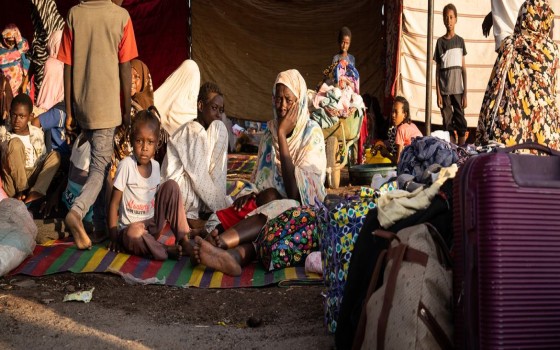
Among them are 318 million people in Gaza, Sudan, and Yemen: A UN map to monitor and predict hunger amid rising acute food insecurity due to the effects of the Middle East crisis

- Europe and Arabs
- Friday , 17 April 2026 5:49 AM GMT
New York: Europe and the Arabs
"Hunger is a predictable problem, and therefore, we can act proactively to address it," a World Food Programme (WFP) official emphasized, adding that this underscores the critical importance of information systems and data platforms like the "Hunger Map."
The interactive Hunger Map displays global trends in hunger levels, reviews the historical record of this phenomenon, and allows users to "see the current situation we are experiencing today; the map shows the areas with the highest levels of food insecurity, which are home to the largest populations suffering from this crisis," Jan Martin Power, Director of Food Security and Nutrition Analysis at the WFP, told reporters in New York on Thursday.
Power also stressed the map's forward-looking nature, noting that it allows policymakers, journalists, and students to get a feel for "the pulse of the global food security situation."
He explained that the map "was built to monitor changing economic trends and climate shifts, and then assess how these changes are impacting increasing levels of vulnerability." According to the UN's daily news bulletin, which added an article titled "Impact of the Middle East Crisis":
Upon opening the map, the first thing you see is the total number of people worldwide suffering from acute food insecurity: 318 million.
A World Food Programme official stated that "countries at risk of famine are those where populations are facing a food catastrophe, such as Sudan, Yemen, Gaza, and Nigeria."
The map includes different data levels illustrating the underlying causes of food insecurity, including:
Climate.
Economic factors, including food price inflation.
Inadequate micronutrients in the diet.
Power noted that 151 million people live in countries experiencing high rates of food price inflation. He explained that inflation rates are rising due to the ongoing conflict in the Middle East, which has led to increased energy prices. A worrying figure.
The UN official said that what is most alarming is that the most severe form of food insecurity – Phase 5 of the Integrated Food Security Phase Classification (IPC), the catastrophe phase – has seen a dramatic increase.
He explained that the number of people living in these conditions jumped from 85,000 in 2019 to 1.4 million last year.
He added: “This represents a 15-fold increase, driven by challenges related to access to aid, funding constraints, and armed conflict.”
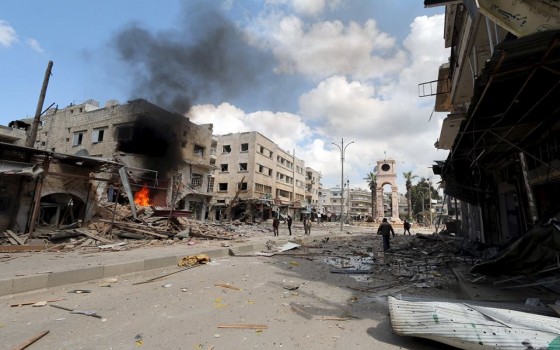
He warned that two-thirds of people suffering from acute food insecurity live in fragile contexts, are exposed to violence, or are affected by armed conflict.








No Comments Found