
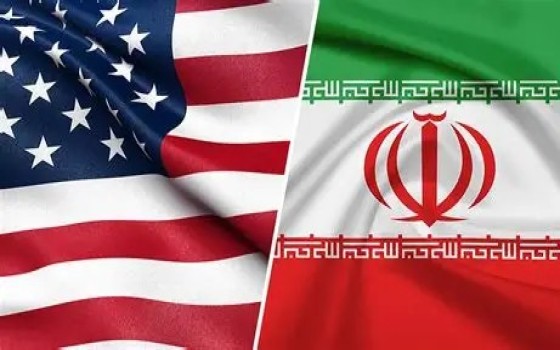
The world is watching closely for the possibility of renewed military confrontations amid stalled US-Iranian negotiations.

- Europe and Arabs
- Saturday , 16 May 2026 7:57 AM GMT
Washington, Beirut, New Delhi: Europe and the Arabs – Agencies
Uncertainty still surrounds the possibility of a renewed military confrontation between Washington and Tel Aviv on one side, and Tehran on the other.
The New York Times, citing aides to President Donald Trump, reported that he has not yet made a decision regarding his next steps concerning Iran.
The newspaper revealed that Trump's aides have prepared plans that include resuming military strikes against Iran should the president decide to break the current stalemate with a new escalation.
For its part, the Israeli newspaper Yediot Aharonot reported a state of alert within Israel in anticipation of a possible resumption of war against Tehran, given the uncertainty surrounding whether Trump will opt for a return to the military option or continue political negotiations. According to Euronews in Brussels, the newspaper did not rule out the possibility of the United States carrying out limited and swift strikes targeting specific Iranian sites, with the aim of increasing pressure on Tehran. Washington accuses Iraqi citizen of helping Kataib Hezbollah plan attacks against US interests in Europe
The US Department of Justice announced on Friday the arrest of an Iraqi citizen accused of involvement in several attacks against US interests in Europe and his transfer to the United States to face six terrorism-related charges.
Prosecutors stated that the suspect, Muhammad Baqir Saad Dawood al-Saadi, was a senior member of the Iranian-backed Kataib Hezbollah and charged him with providing material support to a foreign terrorist organization.
CNN: Iran suspected of hacking fuel level monitoring systems at gas stations
CNN reported that US officials suspect Iran of hacking fuel level monitoring systems at gas stations in several states.
The report indicates that the hackers exploited vulnerabilities in the unprotected electronic systems.
The network confirms that no physical damage was caused to the systems and that the hackers altered the fuel level display, rather than showing the actual quantity. Sources familiar with the matter told CNN that suspicion is falling on Tehran, given its previous attempts to infiltrate these systems, and warned that the perpetrators may never be identified.
It remains unclear why these systems lacked stronger protection in the event of previous attacks.
According to CNN, neither the FBI nor the Cybersecurity and Infrastructure Security Agency (CISA) has commented.
Regarding Lebanon, the Beirut negotiating delegation emphasized its commitment to a clear and verifiable implementation mechanism, including US guarantees for fulfilling the obligations related to extending the ceasefire for an additional 45 days.
The delegation affirmed that Lebanon will continue to participate constructively in the negotiations, while stressing the importance of preserving the country's sovereignty and ensuring the security of its citizens. On the ground, Hezbollah announced attacks targeting several Israeli barracks and gatherings in southern Lebanon, while the Israeli army reported that its forces had killed more than 220 Hezbollah members in southern Lebanon during the past week.
The Iranian issue and developments in the Middle East in general were present in the discussions held during Trump's visit to China, along with other issues including Taiwan and international and bilateral economic matters. In statements carried by Fox News, Trump said he was not originally in favor of a ceasefire with Iran, but agreed to it out of consideration for Pakistan, referring to the diplomatic efforts led by Islamabad to contain the military escalation between Washington and Tehran.
US President Donald Trump said he would not object to Iran suspending its nuclear program for 20 years, provided the commitment was "genuine," indicating that he would decide in the coming days on lifting sanctions on Chinese oil companies that purchase Iranian oil. On Friday, Trump added that he had discussed the fentanyl issue with Chinese President Xi Jinping, asserting that China would purchase "billions of dollars" worth of American soybeans, which he said would please American farmers.
Trump also attacked a New York Times report on Iran, calling it "treasonous," and denied reports that Iran had retained its missile capabilities, claiming that "80% of them are finished."
Trump emphasized that he rejects any Iranian proposal that grants Tehran any concessions regarding its nuclear program, stating that he "wouldn't even finish reading" any offer that allows Iran to maintain any nuclear activity "in any form." Meanwhile, Iranian Foreign Minister Abbas Araqchi affirmed that his country is working to maintain the current ceasefire to allow for diplomatic efforts, stressing Tehran's openness to various international initiatives, particularly Chinese ones, to help contain the escalation with the United States and Israel. Speaking on the sidelines of the BRICS foreign ministers' meeting in New Delhi, Araqchi said that Iran also seeks to contribute to managing the complex situation in the Strait of Hormuz. He explained that all ships can pass through the strait except those belonging to countries engaged in conflict with Iran, provided that prior coordination with the Iranian navy is necessary given the ongoing military tensions.
The Iranian minister described the situation in the Strait of Hormuz as "highly complex," attributing the core problem to a lack of trust in the United States, in addition to what he termed the contradictory messages emanating from Washington.
He also noted that Pakistani mediation efforts have not collapsed but are facing obstacles and difficulties. He emphasized his country's welcome of any Chinese role that could support settlement and diplomatic efforts, given the strategic relationship between Tehran and Beijing. Araqchi's remarks coincided with the conclusion of the annual BRICS foreign ministers' meeting, where India, as the current chair of the group, issued a separate statement instead of a joint one. This move reflected the significant divergence in the member states' positions regarding developments in the Middle East and the ongoing war in the region.
The BRICS group comprises Brazil, Russia, India, China, and South Africa, along with Egypt, Iran, the UAE, Ethiopia, and Indonesia. Divisions within the group have become increasingly apparent due to differing stances among its members regarding the current confrontation between Iran on one side and the United States and Israel on the other.
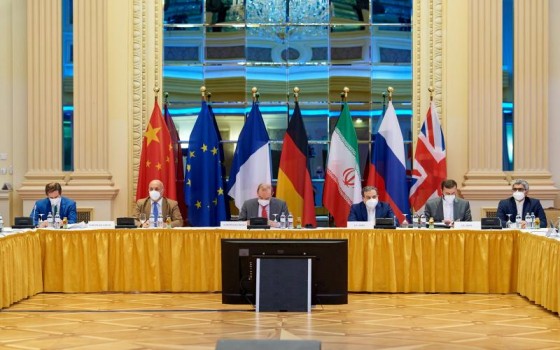
Negotiations between Iran and the United States are at a highly complex stage, marked by a constant oscillation between military escalation and attempts to contain the crisis diplomatically. Despite regional and international efforts to reduce tensions, a wide gap remains between Washington's demands and Tehran's conditions, threatening to undermine any temporary truce.
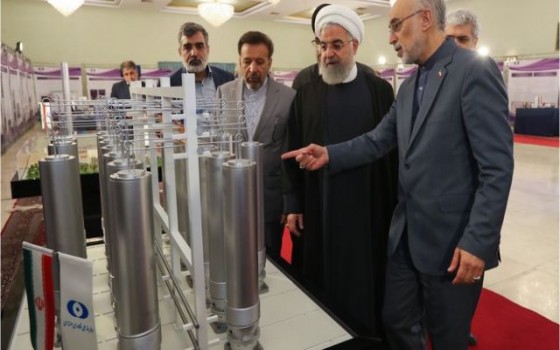
Tehran affirms its readiness to show flexibility on the nuclear issue in exchange for the complete and swift lifting of economic and financial sanctions, as well as compensation for the losses it has incurred. However, it categorically refuses to include its missile program or its defense capabilities in any negotiations, considering this a non-negotiable "red line." Under the headline "Economic Understandings Between Washington and Beijing," the Brussels-based European news network Euronews reported: Amid escalating political tensions surrounding Taiwan, China announced that two days of talks between Xi Jinping and Donald Trump resulted in new economic understandings between the two countries.
Chinese Foreign Minister Wang Yi stated that the two delegations agreed to continue implementing previous understandings reached during past consultations, in addition to establishing a trade council and an investment council.
According to a statement from the Chinese Foreign Ministry, he added that the meetings were "generally positive."
Xi's Visit to Washington Expected
On another note, Chinese Foreign Minister Wang Yi announced that Chinese President Xi Jinping will pay a state visit to the United States this fall, at the invitation of US President Donald Trump, extended during Trump's visit to Beijing.
Xinhua, the official Chinese news agency, quoted Wang as saying that Xi accepted the invitation extended by Trump during the visit, which concluded on Friday.
The US president had invited his Chinese counterpart to the White House on September 24th. Beijing Summit: An Attempt to Contain Differences
The announcement of the anticipated visit came after a two-day summit between Trump and Xi in Beijing, during which both sides sought to keep channels of dialogue open despite ongoing disagreements on several strategic issues. The US president left China on Friday, speaking of trade agreements he described as "fantastic," while Beijing announced understandings related to trade and investment, including discussions on facilitating access to agricultural markets and boosting trade through reciprocal tariff reductions.
Despite the positive atmosphere surrounding the summit, no clear breakthroughs were achieved on major international contentious issues. Observers believe the primary objective of the visit was to contain the differences between the two powers rather than reach final settlements. German Chancellor Friedrich Merz wrote on his social media account that he had a phone call with the US president following the conclusion of his talks in China. His post read: "I had a good phone call with Donald Trump on his way back from China. We agree that Iran must now come to the negotiating table, that it must open the Strait of Hormuz, and that Tehran must not possess a nuclear weapon. We also discussed a peaceful solution for Ukraine and coordinated our positions ahead of the NATO summit in Ankara. The United States and Germany are strong partners in a strong NATO." It is unknown whether Trump was aware of these statements at the time of the call. When Merz last spoke about the United States to a group of young people, the US president responded sharply, a move that led to a further cooling of relations between them. Trump wrote on his Truth Social platform that Merz "doesn't know what he's talking about, and it's no wonder Germany is doing so badly economically and in every other respect."
Mertz had stated last April, during a visit to a school in the state of North Rhine-Westphalia, in the context of talking about the United States, that "an entire nation is being humiliated by the Iranian leadership."


No Comments Found