

Displaced people in Gaza camps are suffering from rat and insect infestations amid deteriorating health and environmental conditions caused by accumulated waste and the collapse of sanitation services.

- Europe and Arabs
- Sunday , 17 May 2026 4:7 AM GMT
Gaza-New York: Europe and the Arabs
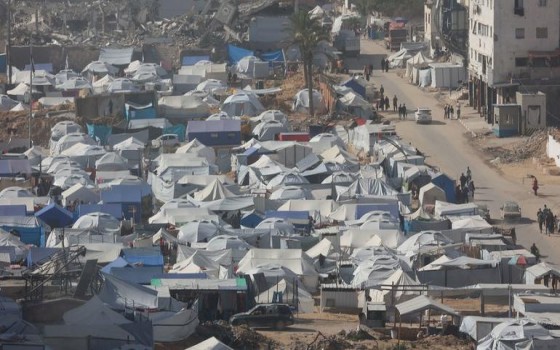
Thousands of displaced families in the Gaza Strip are living in escalating fear and suffering inside their tents, as rodents and insects infest shelters and displacement camps. This is compounded by deteriorating health and environmental conditions resulting from accumulated waste and the collapse of sanitation services, according to the UN Daily News.
Displaced people say that rats now enter their tents daily, contaminating food and attacking children at night. There are growing fears of skin diseases and contamination spreading within the overcrowded environment, which lacks even the most basic services.
In one of the displacement camps in central Gaza City, Fadi Jundiya, who was displaced from the eastern part of the city, says that rodents have become a part of daily life in the camp.
He added, "We have been suffering from rats since the first day the camp was established, but now their numbers are increasing abnormally among the tents. Every time we get rid of one rat, another appears, and we have no real solutions." He pointed out that rats tear the plastic coverings of tents and spoil food supplies, explaining that "primitive traps are no longer effective, given the lack of suitable poisons or their exorbitant prices, which are beyond the means of the displaced."
He said that children live in terror at night, especially when going to the toilets, due to the frequent incidents of bites and scratches inside the camps.
In another tent, displaced person Mohammed Talal said that his child was attacked by rats while sleeping, forcing him to take the child to the hospital at dawn for treatment.
He added, "We can't sleep at night because of the fear of rats, especially with the lights out. I stay awake holding my mobile phone to use its flashlight. And when I don't have money to charge the phone, I carry a stick to protect my children when they go to the toilet at night."
Displaced woman Areej Musbah also spoke about her child being scratched by a rat after it entered the tent at night, confirming that her children have become afraid to move around inside the camp after dark. “We wake up every morning to find rats everywhere, and even the food is no longer safe,” she said. “We want a real solution to this problem because we live in constant fear inside the tent.”
This comes as the United Nations warns of a rapidly deteriorating health situation in the Gaza Strip, with rodents and insects increasingly infesting the tents of displaced people.
UN humanitarian partners report that displaced families are increasingly reporting skin infections and other illnesses as a result of rats and insects entering their tents or contaminating their food.
The UN and its partners are working to improve sanitation and pest control services, but providing an effective and sustainable response requires restoring access to Gaza’s two sanitary landfills, as well as allowing the entry of debris removal equipment and other vital supplies.
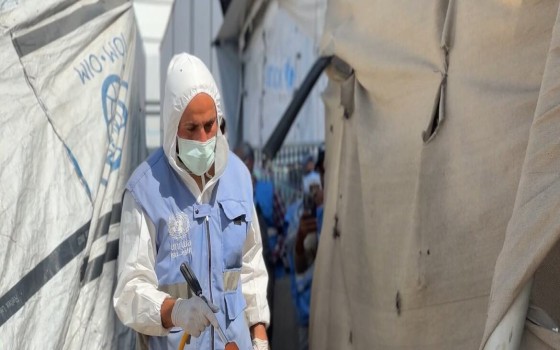
Teams from the United Nations Relief and Works Agency for Palestine Refugees (UNRWA) are continuously carrying out disinfection and pesticide spraying campaigns in the camps for displaced people and some schools that have been converted into shelters, amid warnings that health risks will worsen if the waste and infrastructure crisis continues unaddressed. In an effort to contain the crisis, the United Nations Development Programme (UNDP) announced the launch of a comprehensive plan to combat rodents and insects in the Gaza Strip, in cooperation with local municipalities, following the worsening damage to hospitals, schools, and shelters.
The UN delivered pesticides to the Gaza Strip on Thursday, May 14. A pest control campaign is scheduled to begin next week, prioritizing areas where waste accumulates in or near residential areas, as well as areas surrounding food storage facilities and public markets.








No Comments Found