
European Summit in Brussels: Economic Issues Including Competitiveness, Global Challenges, and the Budget, Alongside the Situation in Ukraine and the Middle East

- Europe and Arabs
- Thursday , 18 June 2026 5:30 AM GMT
Brussels: Europe and the Arabs
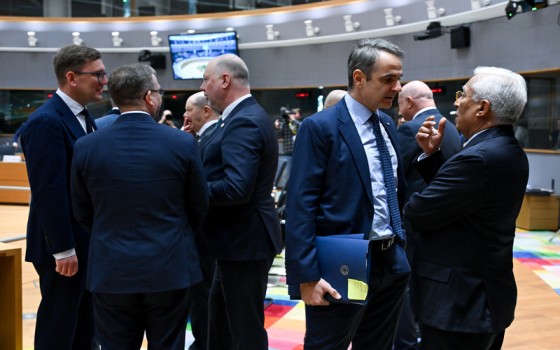
The two-day summit of EU leaders begins Thursday. In his letter to the leaders inviting them to the summit, European Council President António Costa stated: “In a challenging geopolitical context, we will address several critical issues for our citizens and businesses, including competitiveness and global economic challenges, the EU’s Multiannual Financial Framework for 2028-2034, as well as Ukraine and the situation in the Middle East.
As in previous and future European Council meetings, our discussions will focus heavily on the cornerstone of Europe’s prosperity and social model: the competitiveness of our economy. Therefore, we will begin our meeting by reviewing the progress made on the ‘One Europe, One Market’ agenda, in cooperation with the President of the European Parliament and the President of the European Commission, as part of the presentation of the key results of the Cypriot Presidency by President Christodoulides. The ongoing joint monitoring by the three institutions will contribute to this discussion.
We will return to economic issues during dinner, where I would like us to focus on global macroeconomic imbalances and their implications for Europe’s competitiveness and prosperity.” The aim is to reach a shared understanding of the challenges and provide guidance to the Commission on the way forward. Europe must conduct the necessary economic studies, but at the same time, fair competition at the global level requires a level playing field.
Building on our productive discussions in Cyprus in April, I would like us to return to the next Multiannual Financial Framework. The Cypriot Presidency will present the first negotiating plan with figures. To guide the work of the incoming Irish Presidency, we should focus our discussions on the key elements for facilitating an agreement by the end of the year. This includes making progress on new self-generated resources, which will be crucial for aligning our ambitions with the necessary means.
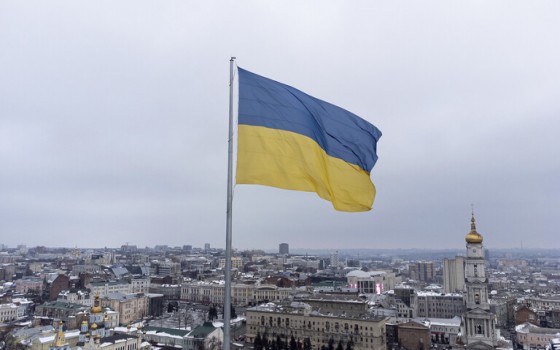
Ukraine remains high on our agenda, and we will begin our discussions by hearing from President Zelensky. Ukraine has achieved renewed success on the battlefield, while Russia is failing to achieve its military and strategic objectives. Russia’s reckless and irresponsible behavior towards EU Member States is unacceptable and signals a reversal of power. Our two-pronged approach—supporting Ukraine and increasing pressure on Russia—is paying off. Our meeting will provide an opportunity to send a strong signal of unity, and I expect we will welcome the opening of the first phase of accession negotiations for Ukraine and Moldova, a significant milestone on their path to EU membership. This meeting ends the long-standing deadlock in the accession process for these two countries. Alongside the momentum gained on the Western Balkans, as we saw at our recent summit in Tivat with our regional partners, there is renewed momentum in the enlargement process.
The recent drone incursions into EU airspace, including the crash of a Russian drone carrying explosives into a residential building in Romania, underscore the need to press ahead with our Common Defence Readiness agenda, including strengthening the EU’s eastern flank. While progress has been made in defence spending and capabilities, much more remains to be done.
We will address the latest developments in the Middle East, including the conflict in Iran and its wider implications, particularly for energy prices. We will also discuss the tragic situation in Gaza and the West Bank, as well as developments in Lebanon, including the EU’s ongoing efforts to support the ceasefire and the Lebanese state and its people. As is customary, we will review the progress made in implementing previous recommendations on migration to ensure that work continues at a rapid pace in all priority areas. We expect a message from President von der Leyen to enrich our discussions.
Finally, I would like us to address the issue of illicit drugs, a problem that directly affects the lives of European citizens and our societies. This is a challenge that requires a comprehensive approach at the governmental and societal levels. Following the adoption of the EU Drug Strategy, it is crucial to ensure its effective implementation.
Our meeting will begin on Thursday, June 18, at 6:00 p.m., and I intend to conclude it after lunch on Friday, June 19.
According to the European Playbook, the leaders will hear from President Zelenskyy on the latest developments in Ukraine. The EU President stated: “Our two-pronged approach – supporting Ukraine and increasing pressure on Russia – is bearing fruit.” President Costa said that, regarding EU enlargement, leaders will discuss opening the first set of accession negotiation chapters with Ukraine and Moldova. This is a recognition of the determination, courage, and hard work the two countries have shown in pushing forward with reforms, even in the face of significant challenges. It is also a sign that the EU's offer of peace, stability, and opportunity is unparalleled.
President Costa and European Commission President Ursula von der Leyen echoed this sentiment.
In this context, President Costa noted a renewed momentum in the enlargement process, which was also evident at the recent EU-Western Balkans summit in Tivat.
The discussion will officially focus on "global microeconomic imbalances," but everyone knows it revolves around China, a senior diplomat told me. The key question is: Should the EU toughen its stance towards Beijing? "There is a trend towards a more assertive approach," another senior diplomat said, noting that member states are more aligned today than they were a few years ago.
Ukraine is on the summit agenda for the usual reasons, such as military support and peace efforts. However, a number of diplomats indicated that they also expect Zelensky to strongly promote Ukraine's accession to the European Union.
In a related development, Ukrainian Deputy Prime Minister Taras Kachka told Nick Wincor of Playbook that he expects discussions on all the reforms countries must negotiate before joining the European Union to begin shortly after ministers formally started accession talks with Ukraine and Moldova. Kachka said, "We have seen that a majority of member states support the idea of addressing all the reforms. The pre-summer break deadline is the usual one."
Germany on alert: Two diplomats said they expect leaders to at least begin discussions on Friedrich Merz's proposal for associate membership for Ukraine. However, another diplomat indicated that talks will likely be postponed until the October summit dedicated to EU enlargement.
On a side note: Leaders may also want to discuss reports that a member of European Council President António Costa's government has attempted to open a channel of communication with the Kremlin.
A carbon market debate: The competitiveness discussion will give leaders an opportunity to address a topic that has long been of interest to them: the emissions trading system. Critics argue that high carbon prices are putting pressure on manufacturers already struggling with weak growth, rising energy costs, and competition from China and the United States. Supporters, on the other hand, maintain that the carbon market remains the EU's most effective climate tool and a key driver of clean investment.
The dispute centers on whether the emissions trading system should be mentioned at the summit's conclusion. Ten countries, led by the Czech Republic, Italy, and Poland, intensified their criticism of the system during the Council meeting in March and are now demanding its inclusion in the final text. A diplomat said that Italian Prime Minister Giorgia Meloni and Czech Prime Minister Andrej Babiš would push for its inclusion but would face resistance from other capitals. Another official said the emissions trading system has no place on the leaders' agenda and that any mention of it at the conclusion would have little impact on the Commission's upcoming review of the carbon market.




No Comments Found