

In a world dominated by trade, technology, defense, and migration, given the limitations of its political tools, the European External Action Service (EEAS) is engaged in a battle with the European Commission over influence and the management of its work in addressing global challenges.

- Europe and Arabs
- Monday , 29 June 2026 9:17 AM GMT
Brussels: Europe and the Arabs
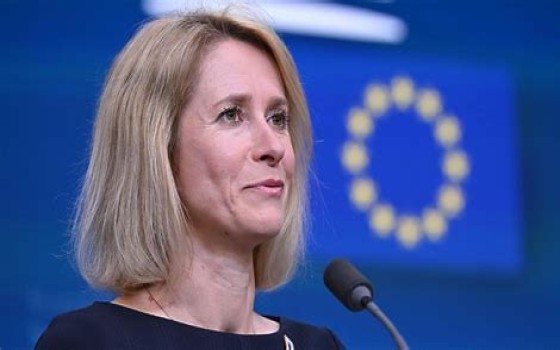
Under the headline "A Battle for the European External Action Service," the European news website Playbook, reporting from Brussels, states: "The European Union's diplomatic service, headed by Kaja Kallas, is struggling to survive under immense financial pressure and a long-running power struggle with the European Commission, led by Ursula von der Leyen." The magazine, the European edition of the American magazine Politico, continues under the headline "A Heated Struggle": "The winner of this battle will determine how the EU deals with global challenges in the coming decades, either through an increasingly powerful European Commission or a diplomatic service fully empowered by the capitals of member states." A Foreign Policy Without Enough Power: Despite the complex relationship between Kallas and von der Leyen, the main problem facing the European External Action Service, launched in 2011, is its lack of the political tools and financial power necessary to assert itself in a more aggressive global environment, according to ten current and former officials and diplomats. Most of them were granted anonymity because they were not authorized to speak publicly about the leadership dynamics.
Their diagnosis: The European Commission is gradually undermining the European External Action Service (EEAS) by poaching senior staff, duplicating tasks, and bolstering Ursula von der Leyen’s global profile.
Conversely, the EEAS struggles to compete in a world dominated by trade, technology, defense, and migration, given its limited policy tools.
A nostalgia: This disparity stems from the creation of the EEAS through a “messy 3 a.m. compromise,” recalls Pierre Sellal, France’s former ambassador to the EU. Today, with Donald Trump upending traditional diplomacy, that compromise is beginning to unravel.
He added: “Foreign policy defined by pronouncements on the one hand and sanctions on the other is not foreign policy.” The European External Action Service (EEAS) is trying to hold its ground: While EU member states debate the future of the diplomatic body, Kallas is countering this with a new leadership structure that includes Secretary General Kajsa Ollongren, the former Dutch defense minister. More changes are expected after the summer.
However, many officials remain skeptical that staffing changes will solve deep-seated structural problems. “We may have destabilized the system with all these institutional changes since Nice and Lisbon,” said Sellal.
The bottom line: The EEAS is unlikely to close anytime soon, but an accounting is underway that will redefine the true centers of power in Europe.




No Comments Found