

Drowning Deaths on the Migration Route to Gulf States via Yemen: Over 100 Ethiopians Perish off the Coast of Djibouti

- Europe and Arabs
- Monday , 12 October 2026 4:36 AM GMT
Sanaa – Geneva: Europe and the Arabs
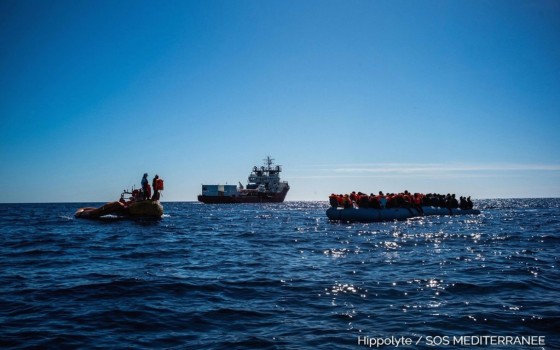
The International Organization for Migration (IOM) stated that at least 109 migrants—including 15 children—died, and more than 116 others went missing, after a boat carrying 305 people capsized off the coast of Djibouti.
Alexander Kuvasak, IOM’s Chief of Mission in Djibouti, said: "This is a tragic loss of life. Our hearts go out to the survivors and the families who have lost loved ones or are still without news of their relatives."
Kuvasak confirmed that IOM teams are on the ground alongside local authorities to provide emergency assistance, noting that this tragedy serves as a stark reminder of the dangers migrants face along this migration route as they seek economic opportunities, according to the UN daily news bulletin.
The organization reported that the boat was traveling from Djibouti to Yemen when it capsized near the Godoria area, north of Obock, during the night of October 8–9, according to survivors.
Among the 109 bodies recovered were 52 men, 42 women, and 15 children (nine girls and six boys). More than 80 people survived the incident; all are Ethiopian nationals. Assisting Survivors
The International Organization for Migration (IOM) stated that it is assisting 64 survivors at its Migrant Response Centre in Obock, providing them with healthcare, psychosocial support, protection services, temporary shelter, food assistance, and support to reconnect with their families.
It added that authorities in Djibouti are continuing search and rescue operations amidst growing concerns regarding the fate of the missing. Local authorities are providing medical care to survivors and arranging for the dignified burial of the deceased.
The organization noted that despite the violence in Yemen, migrants continue to undertake these perilous journeys in hopes of reaching Gulf states. Since September 10, the IOM’s Displacement Tracking Matrix has recorded more than 20,000 arrivals in Djibouti from Ethiopia.
The IOM stated that the risks are not limited to the sea crossing; migrants arriving in Yemen face dangers such as violence, arbitrary arrest and detention, exploitation, and human trafficking.
This follows an IOM warning that Djibouti is facing "overlapping emergencies" as it continues to manage the influx of people arriving from Yemen and transiting through its territory toward Gulf states, noting that the scale and complexity of their needs are placing immense strain on available resources and services. Speaking to reporters in Geneva via video link, Alexander Kwasak, head of the organization’s mission in Djibouti, stated that more than 3,700 refugees from Yemen have arrived in the country over the past three weeks following a perilous journey across the Red Sea. They were accompanied by over 500 Ethiopian migrants attempting to return home, while more than 20,000 people arrived from Ethiopia intending to head toward Yemen.
He added, "Djibouti is thus facing movement in both directions: people fleeing Yemen and arriving as refugees, migrants continuing their journey toward Yemen, and others turning back."
Kwasak expressed concern regarding migrants stranded along Djibouti’s roads and in its desert areas, where they face the risks of dehydration, exhaustion, and shortages of food and water.
He explained that while the organization is already providing immediate assistance to stranded migrants, they are increasingly taking secondary routes, making it more difficult to reach some of those in need.
He noted that Djiboutian authorities responded quickly, but the scale and complexity of these needs are straining existing resources and services, underscoring the need for further support for those arriving from Yemen, migrants facing dire conditions, and the local communities hosting them.
He said, "The country is currently dealing with people moving in different directions and for various reasons, yet they often face the same pressing reality: the need for safety, protection, and basic assistance." Responding to questions from journalists, Kwasak stated that the International Organization for Migration (IOM) had received reports of migrant deaths in the desert along the border with Ethiopia.
He expressed shock that most migrants spoken to by IOM staff while traveling along the "Eastern Route" toward Yemen "were unaware of the situation" there, noting that the organization is working to keep them informed of the latest developments.
However, he remarked: "It seems that nothing can alter these migrants' determination to leave their home countries—aiming to reach not Yemen, but the Gulf region, specifically Saudi Arabia and other Gulf states—in search of a better life."








No Comments Found