
International Women's Day: A UN Call for Justice, Concern Over the Return of Patriarchy... Slight Increase in Women's Representation in Parliaments... Highest in the Americas, Lowest in the Middle East and North Africa

- Europe and Arabs
- Saturday , 7 March 2026 3:48 AM GMT
New York – Geneva: Europe and the Arabs
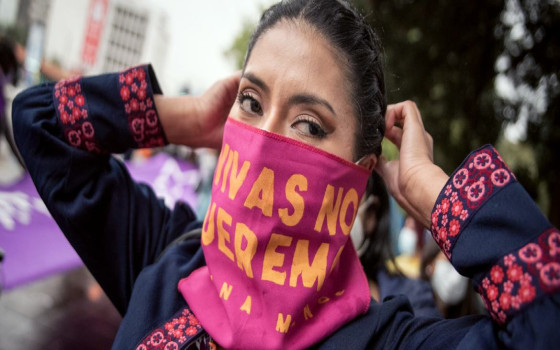
"It is time to make justice a reality for women and girls everywhere," UN Secretary-General António Guterres emphasized in his message on International Women's Day.
He noted that this international day – observed annually on March 8 – is an occasion "to achieve justice for all women and girls," pointing out that women enjoy only 64% of the legal rights afforded to men. This was reported in the UN Daily News, a copy of which we received on Saturday morning.
He warned that we are witnessing the emergence of "a new and dangerous trend." With the rise of authoritarianism, increasing political instability, and renewed efforts to entrench a system based on male dominance, hard-won gains are at risk of being reversed, whether in terms of fairer protections in the workplace or sexual and reproductive rights.
The Secretary-General stated, "We are not equal if we are not equal before the law." Patriarchy and Legal Discrimination
The UN High Commissioner for Human Rights, Volker Türk, expressed "deep concern" about signs of a resurgence of patriarchy in many parts of the world.
In his address to the Human Rights Council on International Women's Day, he highlighted the challenges faced by women and girls globally, including the rise of online harassment, coercive control, and the use of sexual violence as a weapon of war.
He expressed particular shock at the news of the murder of Iraqi women's rights activist Yanar Mohammed earlier this week.
Türk also stated that "discrimination against women and girls affects all aspects of their lives. But discrimination in the law is one of the most insidious forms of discrimination."
Women Leaders and a More Inclusive Approach
The UN official reiterated the United Nations' call for gender equality as a fundamental right and a matter of justice, "the only way to build peaceful, stable, and inclusive societies." He continued, "Women leaders often adopt a more inclusive and participatory approach, which strengthens community cohesion. Their full participation and leadership make communities more resilient, businesses more prosperous, and peace agreements stronger."
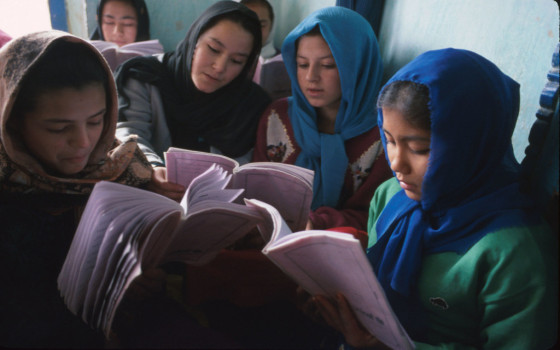
He explained that because discrimination begins early, girls must be protected from child marriage and female genital mutilation, and they must be guaranteed equal opportunities in education and training. Women must be able to choose their fields of study and be empowered to work, participate, and lead.
He stressed that societies need "specific policies that challenge patriarchal norms and stereotypes," calling for raising awareness among men and boys about the harm that patriarchal power inflicts on everyone.
Turk also spoke about the remarkable progress women and girls have made, including the enrollment of an additional 50 million girls in schools worldwide since 2015, and the increased representation of women in parliaments, which, despite this progress, remains very low. A slight increase in women's representation in parliaments
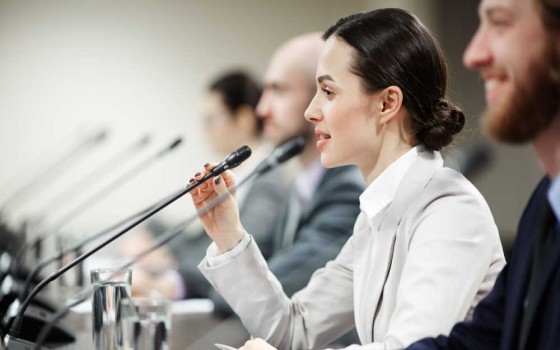
Women's representation in parliaments is highlighted in a new report by the Inter-Parliamentary Union (IPU) on "Women in Parliament 2025," which is based on data from 49 countries that held parliamentary renewals for 62 assemblies in 2025. The report shows the following:
Women will hold 27.5% of national parliamentary seats globally as of January 1, 2026, a slight increase from 27.2% in 2025.
Of the 75 new parliamentary speakers appointed or elected in 2025, only 12 (16%) will be women.
The Americas remain the region with the highest percentage of women in parliament, with women comprising 36.1% of elected members in the 20 parliaments of the 13 countries that held elections in 2025. Kyrgyzstan recorded the greatest increase in women’s representation among the countries that held parliamentary elections in 2025, with a 12.9 percentage point increase in women’s representation in its parliament. Women’s parliamentary representation remained the lowest in the Middle East and North Africa region, where women held only 16.2% of seats on average.
Three countries—Oman, Tuvalu, and Yemen—have no female members of parliament.
The IUCN also highlighted violence against women parliamentarians, citing a recent report showing that female MPs are more likely to experience intimidation from the public—both online and offline—than their male counterparts, with 76% of women surveyed reporting experiencing violence compared to 68% of men.
No Comments Found