
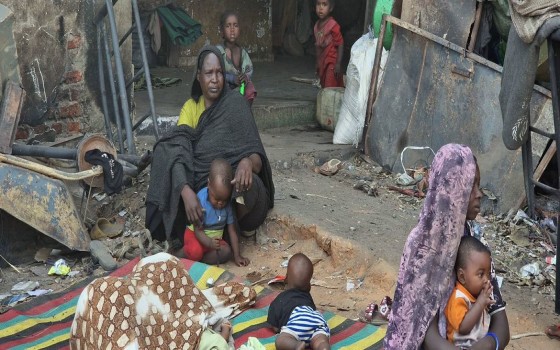
More than 60 countries are integrating refugees and migrants into their health policies; their numbers have reached one billion.

- Europe and Arabs
- Friday , 27 March 2026 6:54 AM GMT
Geneva: Europe and the Arabs
The World Health Organization (WHO) reported significant progress in integrating refugees and migrants into national health policies. New data shows that more than 60 countries have already begun adapting their health systems to meet the needs of these groups, a move that reinforces the trend toward more inclusive health systems.
This was revealed in a new report released by the WHO on Thursday concerning the health of migrants and refugees. Based on data from 93 countries, the report constitutes the first global benchmark for tracking progress toward building inclusive health systems that meet the needs of migrants.
The WHO stated that migration is a defining feature of our shared history, driving cultural, social, and economic developments across generations. Today, more than one billion people—over one in eight people worldwide—are refugees or migrants. However, the organization cautioned that many refugees and migrants face barriers to accessing healthcare services, increased risks of infectious and chronic diseases, mental health challenges, and unsafe living or working conditions. Dr. Tedros Adhanom Ghebreyesus, WHO Director-General, said: "Refugees and migrants are not just recipients of care services; they are also health workers, caregivers, and community leaders. Health systems will only be truly inclusive if they serve everyone."
Dr. Tedros explained that the WHO's new report demonstrates that integrating refugees and migrants into society benefits entire communities and strengthens their preparedness for future health challenges. On its website, the organization stated, "The migration of people is a defining feature of our shared history, driving cultural, social, and economic developments across generations. Today, more than one billion people—over one in eight people worldwide—are refugees or migrants. The reasons for migration range from conflict and disaster to economic opportunities, education, and family needs. However, many refugees and migrants face barriers to accessing healthcare, increased risks of infectious and chronic diseases, mental health challenges, and unsafe living or working conditions." Dr. Tedros Adhanom Ghebreyesus, WHO Director-General, added, "Refugees and migrants are not just recipients of healthcare; they are also health workers, caregivers, and community leaders. Health systems will only be truly inclusive if they serve everyone." The WHO’s new report on the health of refugees and migrants demonstrates that integrating refugees and migrants into society benefits entire communities and strengthens preparedness for future health challenges. Investments in refugee and migrant health yield significant returns, as they improve their social and economic integration, enhance the resilience of health systems, and contribute to global health security. Inclusive and responsive health systems also reduce long-term costs by enabling healthy and well-integrated populations to contribute fully to their communities. The new report, “Global Report on Promoting the Health of Refugees and Migrants: Monitoring Progress in Implementing the WHO Global Plan of Action,” shows that countries, even in politically sensitive contexts, are increasingly relying on evidence, data, science, and established standards and norms to guide their approaches to migration and health issues within their systems. National health.
Case studies from all six WHO regions illustrate how progress can be made in practice—from expanding health insurance coverage for migrants in Thailand, to using intercultural mediators in Belgium, to involving representatives of the migrant community in primary health care decision-making in Chile.
Gaps Remain
Despite progress, the report highlights the following persistent gaps:
Only 37% of surveyed countries routinely collect, analyze, and disseminate data on migrant health within their national health information systems.
Only 42% of countries include refugees and migrants in their emergency preparedness, disaster risk reduction, or response plans.
Fewer than 40% of countries report training health workers to provide culturally sensitive health care for refugees and migrants.
Only 30% of countries conduct awareness campaigns to address misconceptions and discriminatory practices regarding the health of refugees and migrants.
Access to services remains uneven: while refugees are generally more likely to access health services, irregular migrants, internally displaced persons, migrant workers, and international students suffer significantly from inadequate and inconsistent service coverage.
Refugee and migrant participation in governance remains limited: Refugees and migrants remain underrepresented in health governance and decision-making processes in most countries.
The way forward:
The organization welcomes the progress made and urges governments, partners, and donors to accelerate progress by:
Integrating refugees and migrants into all national health policies, strategies, and plans.
Strengthening the routine collection and use of disaggregated data on migrant health for planning and accountability purposes.
Coordinating efforts across the health, housing, education, employment, and social protection sectors.
Developing strategies tailored to the specific needs of different migrant subgroups, including irregular migrants.
Effectively engaging refugees and migrants in planning, governance, and service design and delivery.
Training health workers to provide equitable and culturally sensitive care.
Combating misinformation and discriminatory practices through evidence-based action. Protecting and increasing funding sources to ensure that everyone can make progress.
The organization will continue to provide Member States with the necessary support to translate commitments into action by strengthening evidence, culturally sensitive care services, and integrating refugees and migrants into resilient national health systems. At the global, regional, and country levels, the organization will also continue to strengthen its work with partners, including the International Organization for Migration (IOM), the United Nations High Commissioner for Refugees (UNHCR), and the World Bank, to promote coordinated, rights-based approaches to safeguarding the health of refugees and migrants.
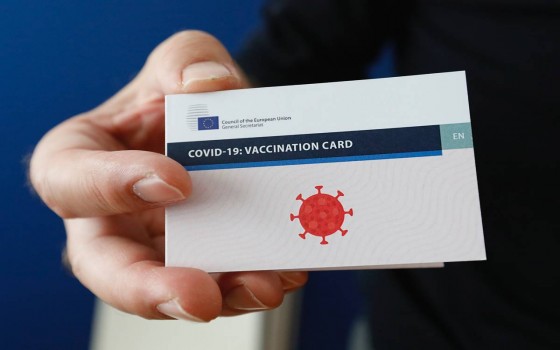
The International Organization for Migration (IOM) became the first international organization to join the Global Network for Digital Health Certification (Global Network), a public digital infrastructure hosted by the organization that enables the verification of health documents in all countries. This new collaboration is expected to strengthen efforts to help migrants secure and verifiable health records wherever they are, supporting the provision of continuous cross-border healthcare services.
As the first organization to join the global network, the International Organization for Migration (IOM) underscores the World Health Organization's (WHO) leading role in public health efforts related to the health of refugees and migrants, and in promoting the establishment of reliable, interoperable, and digital health systems that protect and empower people globally.





No Comments Found