

Egypt's Influence on My Artwork: Cypriot Painter Paraviska Believes in the Power of Colors and Creates Expressive Paintings of Immigrants' Suffering

- Europe and Arabs
- Sunday , 29 March 2026 5:22 AM GMT
Larnaca, Cyprus: Nour Eddine Amrani
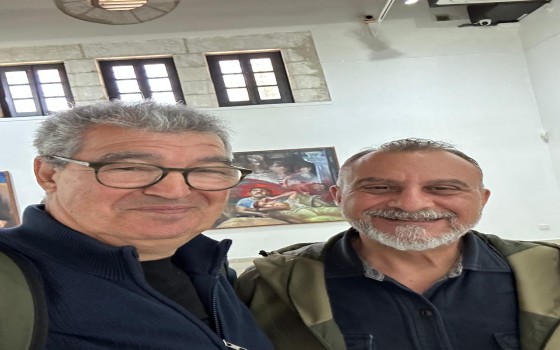
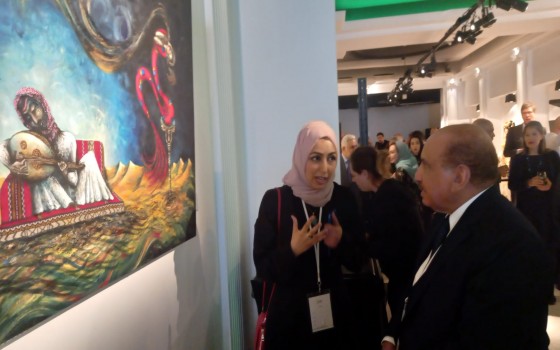
Cypriot painter Andreas Paraskeva is one of the artists who have managed to express the suffering of migrants who left their countries fleeing deadly wars and the oppression of their governments, heading towards what he called the unknown. He was particularly impressed by his travels to several Egyptian cities, including Siwa and others, which left a special impression on many of his works and paintings.
Paraskeva has a unique perspective on life and believes in the power of the colors he uses in his paintings, despite a tragic nature that conceals deep human emotions. His work raises existential questions, and he personally "is pained by the fact that many countries in the Middle East and North Africa possess resources that could make people wealthy, respected, and enjoying full citizenship rights in their societies."
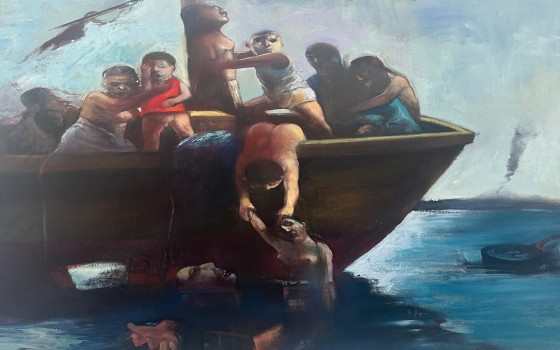
His technique is characterized by a bold use of color and a focus on the human figure. Often striving to approach the boundary between realism and abstraction, he focuses on the fragility of the human body and the struggle for survival or forging bonds under extreme circumstances.
His dramatic lighting and the tense poses of his figures aim to evoke an immediate emotional response in the viewer, and his paintings are a powerful example of how he translates universal human drama into a visually overwhelming spectacle.
Andreas Paraskeva's works on the theme of migration have garnered significant attention in recent years, becoming widely known in art circles due to the raw and unsettling way he portrays this subject. His painting technique relies on his ability to capture universal human drama.
He presents a distinctly vertical structure, and the figures at the top of the boat appear relatively safe, while those below struggle literally to stay afloat. This creates immense visual tension between "salvation" and "loss." Paraskeva often depicts hands clasped or separated. In this work, we witness the desperate attempt of a person clinging to the edge of a boat to pull another from the water. He emphasizes the fragile boundary between life and death. Faces are often distorted or blurred, and in this way, it's not about specific individuals, but about humanity as a whole. He compels the viewer to remain focused on the chaos and fear, relying on the contrast between the heavy, dark colors of the boat and water and the lighter skin tones and clothing of the people, highlighting the fragility of the human body in a hostile environment.
His works are frequently circulated because they strip away the political debate surrounding migration and return it to the core of the human experience: fear, hope, and the will to survive. They raise questions about empathy and our responsibility towards one another.






No Comments Found