
European Union leaders are set to address the cost of living and economic conditions—amidst growing geopolitical uncertainty—at a summit in Brussels. The agenda also covers the EU budget, migration, the situation in Ukraine, Russian actions, and the bloc’s enlargement process.

- Europe and Arabs
- Thursday , 15 October 2026 5:52 AM GMT
Brussels: Europe and the Arabs
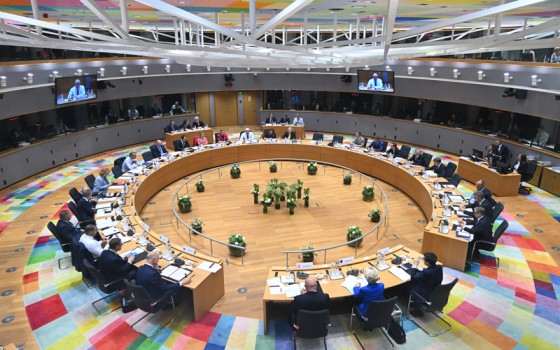
Economic issues—specifically the cost of living, rising energy prices, the budget, and competitiveness—are set to dominate discussions among European Union leaders at the autumn summit, which begins today, Thursday, in Brussels and will span two days. The agenda also includes an assessment of the EU enlargement process, following a series of bilateral meetings held over the past few days with non-EU nations such as Moldova, Ukraine, Turkey, and Albania. Additionally, the topic of migration and related policies will be addressed—an issue expected to spark differences in perspective among the leaders. According to a European statement—which includes a letter from European Council President António Costa inviting leaders to the summit—the meeting will focus heavily on the economy: "Amidst growing geopolitical uncertainty, our upcoming meeting will concentrate intensely on the economy and on providing solutions to the challenges facing European competitiveness and the cost of living."
"In the short term, we must provide guidance to the European Commission on implementing specific, temporary measures to alleviate the burden of high energy prices on our citizens and businesses, while simultaneously advancing our strategy to reduce Europe’s reliance on fossil fuels."
"Furthermore, in cooperation with the President of the European Parliament, we will review the implementation of our comprehensive competitiveness strategy for the 2026–2027 period, known as the 'One Europe, One Market' agenda. I recognize that this file is a top priority for all leaders, and the presidency is working diligently to achieve tangible results. We must, therefore, ensure that progress is made." ...further, ensuring that the leaders' ambitions—and the expectations they have raised—are translated into actual, tangible results that provide real opportunities for our companies, start-ups, and citizens.
Furthermore, we will hear from the Commission—and provide additional guidance—regarding the vital, ongoing efforts to curb global macroeconomic imbalances that affect European industry.
The "Multiannual Financial Framework" for the 2028–2034 period serves as a strategic tool for building a more prosperous, competitive, and strategically autonomous Europe. Reaching a timely agreement on this framework is therefore crucial to providing our economies with the predictability and stability they need in a world marked by instability and volatility. This is precisely what our farmers, researchers, regions, businesses, and citizens expect from the European Union. In October, negotiations on this financial framework will enter a critical phase; our upcoming meeting should, therefore, bring us closer to defining the key elements necessary for reaching a final agreement by the end of the year. I am counting on your leadership and spirit of cooperation.
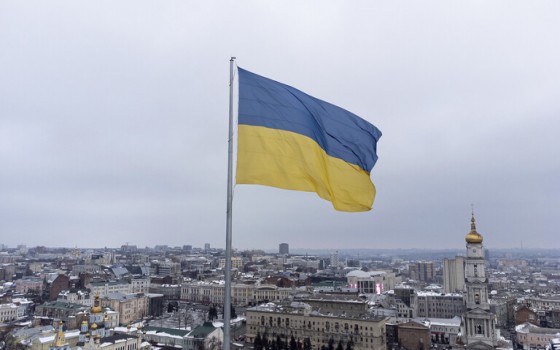
Ukraine remains a top priority for the European Union; we will reaffirm our continued support for the country in the face of Russia’s war of aggression. Given the intensifying Russian attacks on critical infrastructure, it is important to hear from President Zelenskyy regarding Ukraine’s operational needs ahead of the winter season. We will also review the progress Ukraine has made on its path toward EU accession, expressing our hope that... ...that by then, we will have managed to open additional negotiating clusters.
Our meeting will also address Russia’s increasingly reckless behavior, including the campaign of hybrid attacks it is waging across Europe. We stand united and fully determined in the face of this escalation, and we will continue to move forward in strengthening our defense readiness. Building on our previous efforts, we will assess the level of implementation to maintain momentum and accelerate progress across all workstreams—including addressing critical military capability gaps.
We also need to hold two important strategic discussions. The first concerns migration. The figures indicate that our comprehensive approach is bearing fruit, as evidenced by a notable and sustained decline in the number of irregular migrant arrivals; the legislation adopted by the European Union is beginning to yield tangible results. Nevertheless, we must remain vigilant and prepared, standing in solidarity with member states facing crises, while continuing to enhance our crisis-response capacity—including addressing all instances of the "instrumentalization of migration" (as a tool for political pressure).
The second discussion will focus on EU enlargement and reforms, with the European Commission’s document, "Preparing for an Enlarged Union," serving as a foundation for these deliberations. Our discussion will provide strategic guidance for the next phase, with a particular focus on ongoing work regarding Montenegro’s accession, aiming to conclude negotiations with this candidate country by the end of the current year.
It is also important that we return to discussing the situation in the Middle East; this will allow us... Our deliberations will include a review of the latest developments in the region, as well as their impact on freedom of navigation—a fundamental principle of international law—and maritime security. Both are critical elements for global supply chains, particularly concerning energy, fertilizers, and food products.
Our meeting will begin on Thursday, October 15, at 10:00 a.m., and I aim to conclude the proceedings with a lunch on Friday, October 16.
On Thursday, European Union leaders will gather in Brussels for their first summit following the summer break to discuss several key issues, foremost among them economic competitiveness, energy prices, and the budget for the 2028–2034 period. This European Council meeting aims to define the direction for enhancing the competitiveness of European businesses, mitigating the impact of rising energy prices, and advancing negotiations on the next Multiannual Financial Framework, with the goal of reaching an agreement by the end of this year.
The objective is to accelerate ongoing efforts to translate the European Union’s ambitions into tangible results that benefit businesses, young people, and citizens alike.
During the meeting, EU heads of state and government will be briefed on the European Commission’s efforts to address global macroeconomic imbalances that affect European industry.
This issue is part of the EU’s broader endeavor to strengthen its industrial base and bolster its economic position within an increasingly uncertain international environment.
The upcoming EU budget for the 2028–2034 period occupies a central place in the discussions. Costa views this financial framework as a strategic tool for building a more prosperous, competitive, and strategically autonomous Europe—one that provides the Union with the resources necessary to realize its shared ambitions.
Negotiations regarding the multiannual budget will enter a critical phase this October, as European leaders are called upon to make progress on key components, with the aim of aligning the positions of member states and reaching a final agreement by the end of the year. The President of the European Council emphasized that “it will be essential to reach an agreement in a timely manner on the next Multiannual Financial Framework, so that our economies can benefit from the predictability and stability they need in a volatile and unpredictable world.”
Ukraine—described by Costa as a “key priority for the European Union”—is one of the primary items on the summit’s agenda.
European leaders are expected to reaffirm their continued support for the country and to assess its operational needs as winter approaches.
They will also discuss the progress Kyiv has made on its path toward EU accession, specifically regarding the opening of new clusters of negotiating chapters.
The discussions will further address issues related to EU enlargement and the reforms necessary to prepare the Union for the admission of new members.
According to a statement from the European Commission, heads of state and government will be asked to set strategic directions for advancing this process, with particular attention given to Montenegro.
Discussions will focus, in particular, on the work concerning Montenegro’s accession to the EU, with the aim of concluding negotiations—if possible—by the end of the year.
Finally, European leaders will review the latest developments in the Middle East, focusing on their impact on freedom of navigation and maritime security—both of which are essential for the functioning of global supply chains, particularly in the energy, fertilizer, and food sectors.




No Comments Found