
Signs of a Crisis Within the European Union: Hungarian Foreign Minister Was Informing His Russian Counterpart of the Outcomes of Secret Discussions Among European Leaders

- Europe and Arabs
- Monday , 23 March 2026 8:14 AM GMT
Brussels: Europe and the Arabs
Under the headline "Hungary Excluded from Sensitive Talks," a report by Playbook, the European edition of Politico, stated that at a time when relations between Brussels and Budapest appeared to be at their lowest point, a press report claiming that the Hungarian Foreign Minister had been briefing his Russian counterpart "live" during EU summits exacerbated the situation and sparked a crisis of confidence regarding the EU's discussion mechanisms.
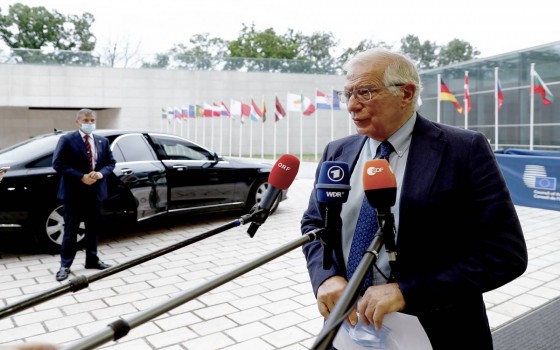
Playbook reported that over the weekend, The Washington Post, citing a European security official, reported that Hungarian Foreign Minister Péter Szijjártó had been in close contact with Russia's top diplomat, Sergey Lavrov, for years, keeping him informed of EU discussions in real time.
Szijjártó denied the report. Hungarian Minister for European Affairs, János Bücca, told Politico: "This is fake news being spread now as a desperate reaction to Fidesz gaining momentum in the election campaign. But the Hungarian people will not be fooled." However, the report sparked a wave of questions from EU diplomats who said Budapest's ties with Moscow were blatant and that trust had reached an all-time low. Polish Prime Minister Donald Tusk posted on X that the report "should not surprise anyone," adding that he only speaks "when absolutely necessary" at EU summits.
Under the headline "Irresponsible Statements," Playbook reported that former Lithuanian Foreign Minister Gabrielius Landsbergis, who regularly attended meetings of senior diplomats in Brussels during his tenure, told Playbook's Gabriel Gaffin that he had received warnings since 2024 that the Hungarians might leak information to Russia, and that he and his counterparts had reduced the information they shared in Szijjártó's presence. A European diplomat wrote in a text message to Playbook: "It wouldn't be surprising if this proves to be true." Hungary has long been a Putin ally within the European Union and continues to undermine European security. Read the full story with Gabriel Gavin.
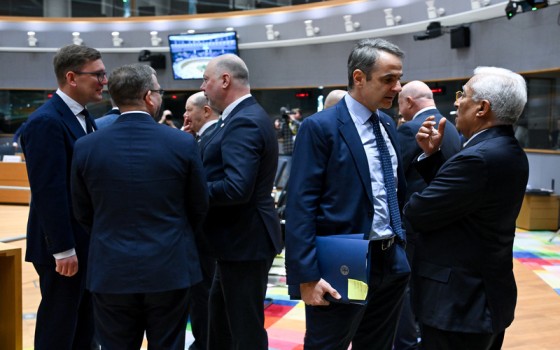
Foreign espionage is a major obstacle to the bloc’s ambitions to be a forum for capitals to discuss security concerns. A senior national government official stated that the main reason “most important European diplomatic efforts have shifted to smaller channels is the risk of ‘disloyal’ EU countries leaking sensitive information to third countries.” Can we discuss this outside the EU? The official listed several channels for discussion outside the EU, including the Trilateral Group (France, Germany, and the UK), the Quadrilateral Group (France, Germany, the UK, and Poland), the Weimar Alliance (Germany, France, and Poland), and the Joint Expeditionary Force (ten EU countries plus the UK), as platforms for serious talks. The Washington Post report is made all the more troubling by the lack of clear rules within the EU about what constitutes confidential information and what happens if it is. Leaks. Some discussions are held under what is known as the "restricted format," meaning ministers meet without aides, and some ambassadors hold talks without using phones in the room to limit leaks. But in the event of a security breach, the leakers are not breaking the law.
It may be time to change this system, according to a senior EU diplomat. He said: "There is a justification for the EU classifying information and documents." Upgrading the rating is not a magic bullet, but it could act as a deterrent against leaks and the transfer of sensitive information to third parties. The diplomat added another benefit: it would make investigations “more automatic.” So far, the European Council has not announced any investigation into the allegations in the Washington Post report. From a Polish perspective: This scandal also highlights the deep divisions at the highest levels of the Polish government. Tusk and his foreign minister have launched a scathing attack on the Hungarian leak allegations… while Tusk’s political rival, Polish President Karol Nowrki, is heading to Budapest today to show his support for Orban’s re-election campaign.
Nowrki joins international leaders, including Donald Trump and Benjamin Netanyahu, who have declared their support for Orban ahead of the April 12 election. US Vice President J.D. Vance is also reportedly traveling to Budapest to show his support for the Hungarian leader. Trump reiterated his “full and unconditional” support in a video message to the Hungarian branch of the Conservative Political Action Committee. (CPAC) on Saturday, in a double event that drew the European right's elite to Budapest. The carnival continues today with the "Grand Assembly" of the Patriots for Europe party, featuring Marine Le Pen of France and Matteo Salvini of Italy.
In short, according to Playbook, "Things are heating up ahead of the Hungarian elections, which hold significant implications for Europe. We may see more surprises before the votes are counted. As of this writing, a Politico poll shows Viktor Orbán's Fidesz party trailing Péter Magyar's Tesa party by 9 percentage points."




No Comments Found