
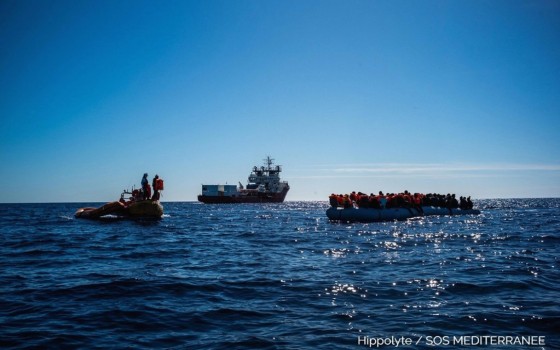
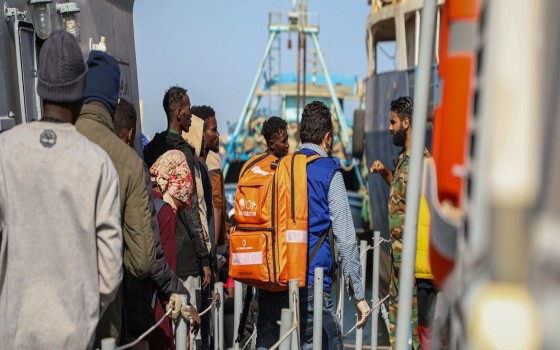
European move to avert a recurrence of the illegal migration crisis from Morocco to Spain via Ceuta: a five-point plan involving cooperation with partner nations and strengthened protection of external borders.

- Europe and Arabs
- Wednesday , 30 September 2026 8:57 AM GMT
Brussels – Europe and the Arabs
The European Commission in Brussels has put forward a five-point plan to prevent, anticipate, and respond to sudden, mass, and illegal arrivals—a plan designed to strengthen the resilience and security of the EU’s external borders. This five-point plan will be presented to Member States during the Justice and Home Affairs Council meeting scheduled for October 1–2, 2026. Addressing these specific challenges requires joint action by Member States, Justice and Home Affairs agencies, and the European Commission; the plan’s implementation will proceed through coordinated efforts among all these parties. According to a statement from the European Commission headquarters in Brussels, the EU possesses a comprehensive and flexible migration management framework—one that has proven effective, as rates of illegal border crossings have fallen to their lowest levels since 2021. However, recent events have put EU borders to the test, from the eastern borders to the shores of the Mediterranean. The "Ceuta" crisis this summer revealed how quickly sudden mass arrivals at the EU’s external borders can escalate and the emergency situations they can trigger. As President von der Leyen emphasized in her "State of the Union" address, the events of this summer demonstrate the need to develop our tools, particularly for handling emergencies; such situations threaten our security and unity, and lead to unacceptable loss of life. Protecting the EU’s external borders is a shared European responsibility; therefore, a unified European response, collective action, and solidarity are essential.
In response to the events in Ceuta, President von der Leyen identified five key areas to guide the EU’s actions. Building on the "European Strategy on Asylum and Migration" issued in January 2026, the Commission is now charting the course of action in these five areas—outlining key measures for various stakeholders while expanding existing tools and frameworks and introducing new ones where necessary:
Strengthening cooperation with partner countries to prevent irregular migration
Enhancing cooperation with partner countries—including in the areas of surveillance, early warning, and information exchange—is crucial to curbing irregular migration. Priority areas include:
Addressing the root causes of irregular migration in cooperation with partner countries and creating genuine opportunities for individuals in their countries of origin through a new initiative for youth skills and jobs in the Mediterranean region, as well as establishing new "Gateway Offices" to facilitate safe and legal mobility to the EU;
Incorporating a strong crisis management dimension into new and existing partnerships, while activating effective early warning mechanisms and protocols; Strengthening cooperation among Frontex, Europol, Eurojust, and partner countries to improve information exchange, risk and threat analysis, and the sharing of intelligence on migration trends and routes; developing coordination centers under the European Border Surveillance System (EUROSUR) in cooperation with partner countries to enhance intelligence sharing and risk assessment in areas beyond the external border.
Strengthening the EU’s external borders
While the protection of the EU’s external borders is primarily the responsibility of Member States, the Union will step up its support to deter and respond to future emergencies or crises, including by:
Working to establish a new European emergency response framework to ensure the security of EU borders at all times—particularly in scenarios where mass displacement movements are manufactured and used as a pressure tactic (the weaponization of migration), as announced by President von der Leyen in her State of the Union address;
Presenting a Commission proposal to strengthen the mandate of Frontex, including support for the "Standing Corps" to enable the immediate deployment of personnel and equipment, expanding the agency's role in return operations, deepening cooperation with partner countries, and enhancing its capabilities to monitor external borders and areas beyond the border line;
Providing targeted support to Member States to reinforce sensitive sections of the EU’s external borders. Providing support through the "Union Civil Protection Mechanism," upon the request of Member States.
Improving monitoring, situational awareness, and early warning systems.
To avert future crises and enhance monitoring and situational awareness, the plan outlines the following key measures:
Proposing an expansion of the mandate of the "Frontex" agency to enable it to monitor social media, thereby enhancing situational awareness and operational support in the context of external border management;
Requiring Member States to provide accurate, relevant, and timely information to the European Border Surveillance System (EUROSUR) and to immediately report any developments affecting the EU's external borders;
Responding flexibly and effectively to emerging migration trends, shifting patterns, and the rapid spread of disinformation and misinformation through the Global Alliance Rapid Response Initiatives (GARRI);
Developing a flexible framework to fully leverage the tools available under the "Digital Services Act" for crisis and incident response, while establishing new protocols to ensure structured, immediate cooperation and information exchange among major online platforms, search engines, and national authorities;
Establishing new digital partnerships with partner countries to monitor and respond to content that fuels irregular migration;
Dismantling Migrant Smuggling and Human Trafficking Networks
Effectively addressing irregular migration requires dismantling the migrant smuggling and human trafficking networks behind it. Efforts will be intensified in the following areas:
The Council should swiftly adopt the proposed sanctions regime, enabling the EU to impose asset freezes and travel bans targeting migrant smugglers;
The Parliament must urgently approve the negotiating position on the revised directive on facilitating migration (aimed at modernizing the EU’s anti-smuggling framework), followed by rapid inter-institutional negotiations; co-legislators must also intensify inter-institutional negotiations regarding the new mandate for Europol;
Strengthening cooperation with online platforms—including within the framework of the EU Internet Forum—as well as with financial institutions and digital payment service providers, to ensure they can detect online smuggling activities and support Member States in identifying, tracing, and uncovering illicit financial flows;
Continuing to strengthen Europol’s European Migrant Smuggling Centre.
Strengthening Return Operations
Effective migration management relies on a common EU system that ensures swift return operations and on the capacity of partner countries to manage these operations themselves. Strengthening this requires the following:
Intensifying cooperation with third countries (non-EU states) on readmission, while utilizing all available tools, mechanisms, and policies to foster such cooperation—including in the areas of trade, development cooperation, and visa policies;
Enhancing the role of Frontex in the return operations of third-country nationals who do not have the right to remain in the European Union;
Member States must also implement the new Return Regulation and border return procedures, and make greater use of the support Frontex already provides regarding return, readmission, and reintegration;
Increasing the effectiveness of return operations and reducing administrative burdens through the digitalization of procedures.





No Comments Found