

Belgium, France, and the Netherlands: Biometric Data Registration for Non-EU Travelers Suspended

- Europe and Arabs
- Monday , 30 March 2026 5:57 AM GMT
Brussels: Europe and the Arabs
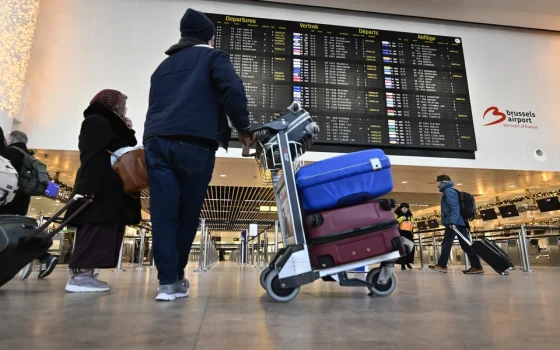
Belgium has announced the postponement of the implementation of a biometric data registration system, including fingerprints and facial scans, for citizens of non-EU countries under the new European Entry/Exit System (EES). This decision was made by Interior Minister Bernard Quentin and his colleague for Asylum and Migration, Anneline Van Bossuet, after trials conducted so far resulted in long queues at airports.
Since October of last year, the European Electronic Border Control System (EES) has been gradually being implemented. The system requires non-EU citizens to provide their fingerprints and facial scans, in addition to their passport and departure date, according to the Belgian news agency in Brussels. The EU decided to implement the system in phases, allowing for intervention in case of technical problems. In exceptional circumstances, such as excessively long queues, member states may temporarily suspend the system. In Belgium, last February, the relevant committee of the Belgian Chamber of Commerce approved the implementation of the European Entry/Exit (EES) system for migrants. The plan was to conduct EES checks at specific times, with the aim of having the system fully operational by April 10, for example at Brussels Airport. However, this will not happen at present, as Belgium has postponed the system's implementation, as the Netherlands and France have already done.
Ministers Quentin and Van Bossuet pointed out that the phased implementation led to a significant increase in waiting times at border checkpoints. They stated that authorities had worked diligently for months to ensure secure border controls, commensurate with the flow of travelers, within the framework of the new system. However, they emphasized that the necessary technical conditions and infrastructure for biometric registration under normal and comfortable conditions for travelers were not yet in place.
According to Minister Quentin, there were "unacceptable" queues, both for travelers and for the image of Brussels. He stressed that the postponement does not affect the quality of current checks. He said, "Every traveler entering our territory will be subject to a thorough check to ensure the security of our country." The relevant authorities will continue their consultations with the European Commission to develop a joint and realistic timetable for the full implementation of biometric registration.
Minister Van Bossuet emphasized: "Secure borders are a prerequisite for an effective migration policy and are essential for the safety of our citizens, including at airports. At the same time, the European system must function smoothly on the ground, which requires more time."




No Comments Found