

Aviation Fuel Shortage Threatens Europe Within Weeks… Trump: No “Time Pressure” for Ceasefire or Talks with Iran… Summit in Cyprus Begins Today

- Europe and Arabs
- Thursday , 23 April 2026 4:45 AM GMT
Brussels – Washington: Europe and the Arabs – Agencies
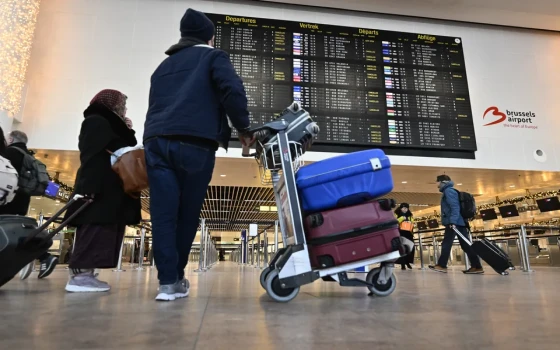
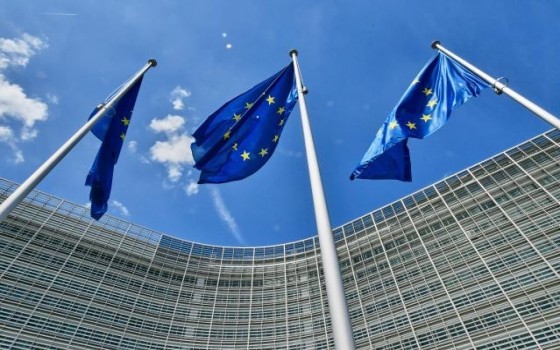
The repercussions of a war in Iran and the potential closure of the Strait of Hormuz will top the agenda of discussions among European Union leaders at a summit expected this evening in Cyprus. European Council President António Costa stated, "We will address the conflict in Iran and the Middle East, which poses serious challenges for the European Union. First, we must discuss our response to this rapidly evolving situation. This includes Europe's contribution to de-escalation and peace in the region, as well as freedom of navigation. Furthermore, the effects of rising fossil fuel prices are already evident in the daily lives of our citizens and businesses. Given the potential negative economic consequences of a protracted conflict, we will discuss the tools at our disposal, based on the decisions taken at the European Council meeting in March and the measures proposed by the Commission in its aftermath. Finally, the EU's preparedness to respond to the changing geopolitical and security environment will be part of this discussion. This may include aspects related to Article 42(7) of the Treaty on European Union, in light of ongoing work." Meanwhile, EU Energy Commissioner Dan Jørgensen warned that the European aviation sector is facing The risk of a severe fuel shortage is imminent, with Jørgensen asserting that this threat could materialize within just five to six weeks.
In a press briefing, Jørgensen explained that the aviation fuel sector is particularly hard hit at present, citing estimates from the International Energy Agency, and stressed the need to take these warnings very seriously.
The escalation in the Middle East and the US-Israeli war against Iran have effectively closed the Strait of Hormuz, a vital strategic waterway for oil and liquefied natural gas supplies from the Gulf states to global markets. This has also negatively impacted oil export and production levels in the region.
Jørgensen revealed that the additional energy costs since the start of the conflict have reached €24 billion, averaging nearly €500 million per day. He emphasized that this affects all EU member states, their industries, and their citizens.
Meanwhile, previous reports indicate that airlines worldwide have begun reducing their flights due to the sharp rise in fuel prices, with expectations that passengers will face further cancellations and schedule changes in the coming months. Destinations.
The German Lufthansa Group announced the cancellation of approximately 20,000 flights from its summer schedule in a move aimed at curbing record-high jet fuel costs, according to an official statement released by the group on Tuesday.
The group, which includes Austrian Airlines, Brussels Airlines, ITA Airways, and Swiss International Air Lines, explained that the cancellations will affect "unprofitable short-haul flights" and will extend until October.
The group estimates that these reductions will save more than 40,000 metric tons of jet fuel. Part of these reductions is a direct result of the decision to close the group's regional subsidiary, Cityline, a decision Lufthansa announced last week.
According to the group's data, the cancellation of Cityline flights alone represents a one percent reduction in the group's usual total capacity during the summer season.
120 Daily Flights Canceled and Services to Three Cities Suspended
In detailing the first phase of the reduction plan, it was announced yesterday that 120 daily flights will be canceled across the rest of the network. The group's companies, and these cancellations will remain in effect until the end of May.
As a result of these adjustments, the group has completely ceased flights to three European destinations: Bydgoszcz and Rzeszów in Poland, as well as Stavanger in Norway.
The group also indicated that it is consolidating the routes of many of its flights to be more concentrated through its main operating hubs in Frankfurt, Munich, Zurich, Vienna, Brussels, and Rome.
US President Donald Trump confirmed to Fox News yesterday that there is no "time pressure" surrounding the ceasefire or the agreement on a new date for talks with Iran after negotiations broke down on April 12.
Speaking to Fox News a day after extending the ceasefire with Iran indefinitely, Trump confirmed that the reported "three-to-five-day window" for the extension was "incorrect."
The US president also commented on the ships that Iran fired upon and seized on Wednesday in the Strait of Hormuz, saying: "They were not American ships." He added that he would be monitoring the situation closely.
Regarding when the war with Iran might end, Trump said there was "no timeframe" and "no rush."
He continued, explaining, "People say I want to end it because of the midterm elections, and that's not true."
Trump emphasized that his administration wanted to "reach a good deal for the American people."
He indicated that "sanctions will scare the Iranian regime more than bombing." They've been bombed for years, but they hate the blockade.” White House spokeswoman Carolyn Leavitt told Fox News earlier Wednesday that Iran's seizure of the two ships did not violate the terms of the ceasefire because “these are not American or Israeli ships, they are international ships.” Speaking to reporters, Leavitt indicated that Trump had not set a deadline for receiving a proposal from the Iranian side. She added, “Ultimately, the commander-in-chief of the United States will set the timeline.” According to Leavitt, Iran “must agree to hand over its enriched uranium to the United States as part of negotiations to end the war.” Leavitt concluded her remarks to Fox News by saying that the Iranians “do not control the Strait of Hormuz. What we are witnessing is piracy.”
The meeting of European heads of state and government will take place in Cyprus on April 23 and 24. Discussions on the first day will focus on European issues, including the situation in Ukraine, the Multiannual Financial Framework, and security and defense. On the second day, the leaders will meet with key regional partners to discuss the situation in the Middle East. Particularly the issue of freedom of navigation in the Strait of Hormuz and its repercussions on European and Arab economies.
European Council President António Costa said, “In our morning session on Friday, April 24, we will address the next Multiannual Financial Framework. Following that, we will continue our discussions on current events in the Middle East during an informal working lunch with leaders from the region. This will provide an opportunity to exchange views on shared challenges, as well as emerging opportunities for cooperation. Our meeting in Cyprus comes at a crucial moment for the EU agenda: it will allow us to review the implementation of the decisions taken by the European Council in March, particularly in the energy sector; it will provide an opportunity for coordination and further policy guidance in light of the ongoing crisis in the Middle East and its impact on European economies; and it will be an important milestone towards reaching an agreement on the next Multiannual Financial Framework.”




No Comments Found